

On June 30, the AAPSS will bid farewell to Paula D. McClain, who has been a member of our board of directors since 2020 and its chair since 2023. Below, she reflects on her time with the AAPSS and shares some early findings from her most recent research. The AAPSS board and staff thank Dr. McClain for her service to the Academy and wish her the best in her next endeavors.
How My Students Argued for the Social Sciences
The social sciences have always received serious scrutiny in national politics, but the current attacks (such as the recent push to eliminate the Directorate for Social, Behavioral and Economic Sciences at the National Science Foundation) are unprecedented. It is vital that we remember that there are significant questions pertaining to the well-being of the nation that the social sciences can answer with data and evidence.
I was reminded of this during my sabbatical this past spring semester, when I had the honor and pleasure to serve as a Margaret Olivia Sage Scholar at the Russell Sage Foundation for two months. Questions on health care, tax policy, criminal justice reform, and issues related to the overall well-being of our democracy were being explored by the scholars who were in residence there. Most of them had already been at Russell Sage for some months and would remain beyond the end of my stay, but they were so welcoming that I did not feel like a newcomer or an interloper.
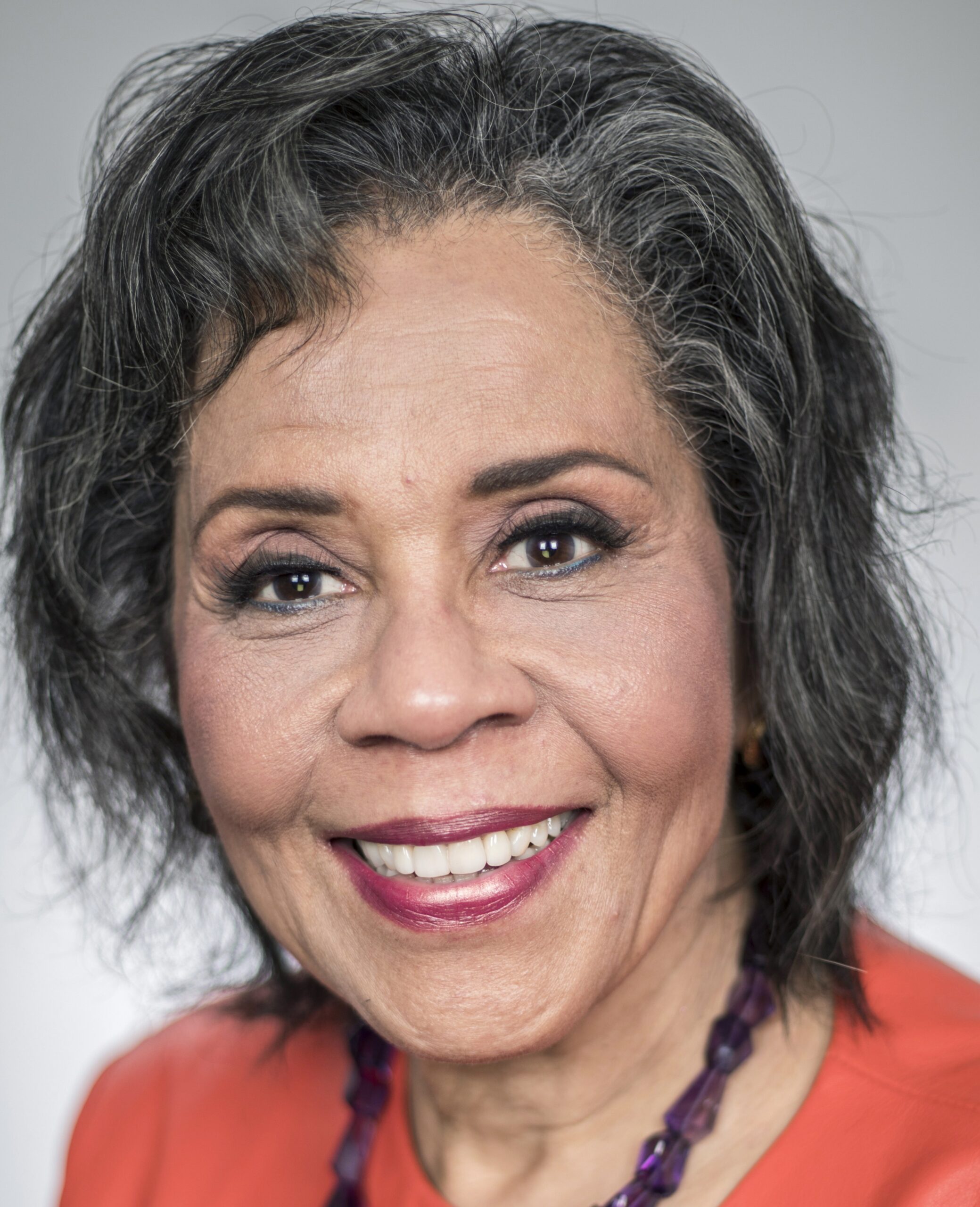
(Photo by Chris Hildreth/Rooster Media)
My intention during my brief stay was to see if I could launch a new project that grew out of questions raised by my students in a fall 2024 class, Introduction to Racial and Ethnic Minorities in American Politics. Donald Trump had won the recent election by a total of 49.8 percent of the vote to Kamala Harris’s 48.3 percent. With my students, I looked at data from organizations that specialize in surveying voters of color—BSP Research and the African American Research Collaborative—rather than at exit-poll data (which have fewer voters of color in the pool), and we were able to identify shifts in the voting patterns of racial and ethnic minority groups.
Analyses by Steven Tauber and me showed that the 2024 election saw a seven-point shift toward Trump (compared to the 2020 election) for Native American men, a 12-point shift among Latino men, an 11-point shift for Asian American and Pacific Islander men, a two-point shift for Native American women, a four-point shift for Asian American and Pacific Islander women, a nine-point shift for Latina women, and an eight-point shift for Black men. All of these shifts were significant, and while these groups still primarily voted Democratic, it is not clear that the shifts were anomalous. Clearly, Trump’s message made inroads, even if temporary, with some voters of color.
These data are even more interesting when voters’ immigrant status is overlaid. An analysis of the 12 percent of Black American men who voted for Trump in 2020 found that “foreign-born Black American men exhibited the most substantial support for Donald Trump, with a whopping 30 percent of them casting votes for him,” versus 11 percent of US-born and 10 percent of second-generation Black American men. Pew Research Center data released on March 20, 2026, indicated that 11.4 percent of the United States’ Black population are immigrants and that 25 percent of Black Americans are immigrants themselves or are US-born with at least one immigrant parent.
Hands went up in class, with students asking questions about what had happened and why various racial and ethnic groups had turned away from Kamala Harris and to Trump. For example, the students had read an article about how Indian Americans responded to Harris, where the experiments indicated that Indian Americans were more responsive to her when she was framed as Indian alone than as Black and Indian American. Could Trump’s attack on her identity have played into her loss? How did questions about her identity play with other populations? What role did sexism among Black, Latino, Asian, and White males play in her loss? What about anti-Blackness among Latino, Asian, and foreign-born Black Americans? What about anti-LGBTQ attitudes among these populations? The questions kept coming, and I had no answers. Punditry and speculating are not appropriate responses to serious questions that deserve serious answers. As Yogi Berra, noted “philosopher” and great catcher for the New York Yankees, once said, “If you ask me a question I don’t know, I’m not going to answer.”
My two months at Russell Sage were spent getting a project off the ground that could answer some or all of these kinds of questions, and I am working on it in collaboration with independent scholar Dr. Monique Lyle and the University of South Carolina’s Dr. Todd Shaw. The datasets with the election results from BSP and the African American Research Collaborative are proprietary (and thus not available for analysis), and the 2024 American National Election Study (ANES) has too few people from various groups to do any serious analysis. We did some preliminary analysis with the ANES on White and non-White respondents, and the results were less than satisfactory. So, we set about testing our hypotheses about the roles of anti-Black racial attitudes and sexism in the 2024 US presidential election using the 2024 Collaborative Multiracial Post-Election Study (CMPS). The 2024 CMPS was a self-administered instrument fielded between May 15, 2025, and October 6, 2025. Its final sample was composed of 19,634 respondents who self-identified as belonging to one or more of six ethnic/racial groups: Latino (5,498), Black (6,162), Asian (4,059), Native Hawaiian or Pacific Islander (430), Middle Eastern or North African (423), and non-Hispanic White (4,411). We restricted our analyses to respondents who identified their primary race as Black, White, Latino, or Asian. These data have not yet been publicly released, but Monique and Todd’s prior involvement in putting questions on the survey allowed them to conduct analyses on the data before their release.
Here are just two small samples of what our analyses are starting to show. We examined how our most rudimentary measures of racial affect—Black and White feeling thermometers—were associated with voting for the 2024 US presidential election. A Black feeling thermometer captures one’s positive or negative affect toward people who are Black, and a White feeling thermometer shows affect toward people who are White. The exact wording of the feeling-thermometer question is:
Next, please rate your feelings towards the following groups on a scale of 0 to 100. A rating of 100 means you feel very favorable towards that group, and a 0 means you feel very unfavorable. A rating of 50 means you don’t feel favorable or unfavorable towards that group.
How would you rate your feelings towards ordinary people from these groups? Remember that we are asking you to rate ordinary people and not elected officials or candidates.
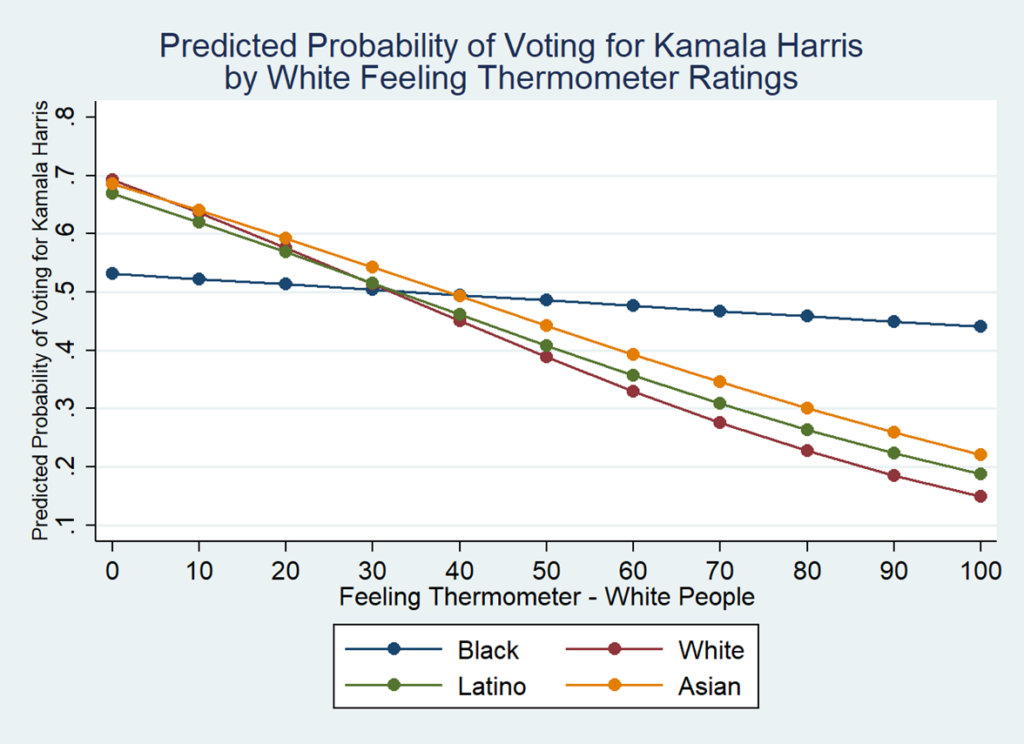
Looking at the various relationships, White feeling-thermometer ratings were strongly related to the voting choices of Whites, Latinos, and Asians: In those voter groups, people who had more positive feelings toward White people were less likely to vote for Kamala Harris (see figure below). Interestingly, these groups’ feelings toward White people were more strongly related to their voting choices in 2024 than were their feelings toward Black people. Among Black respondents, on the other hand, White feeling-thermometer ratings had only a marginally significant relationship to vote choice.
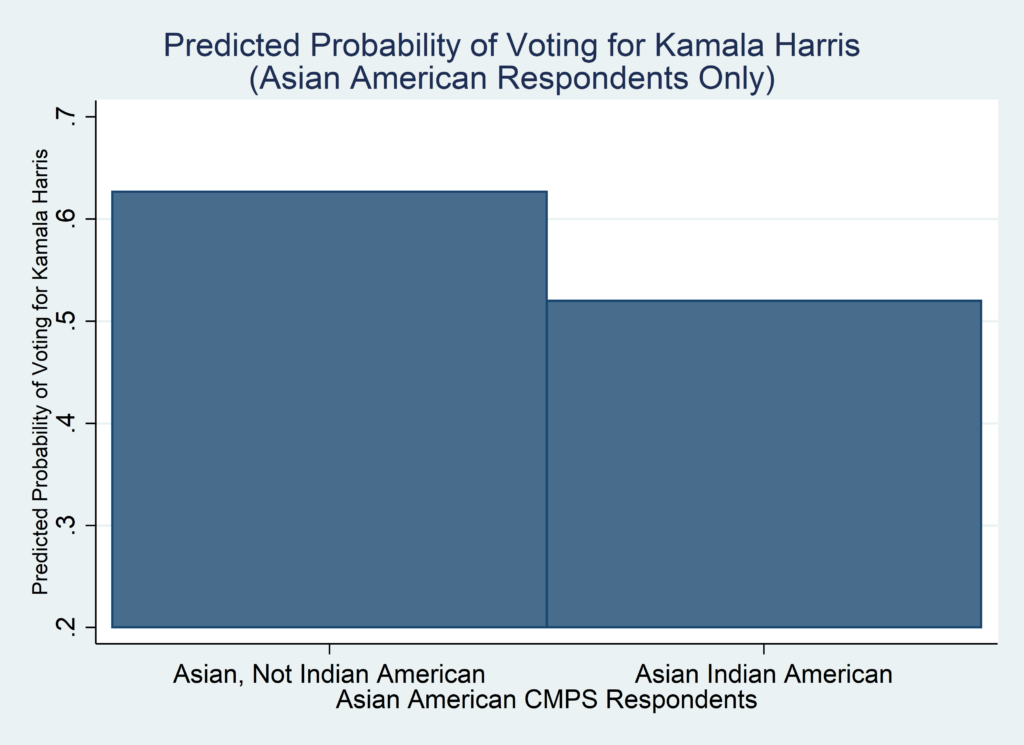
Another interesting preliminary finding is vote choice among South Asian voters when Asian American groups were run separately. Given Kamala Harris’s mixed Black/Indian racial identity, we also examined whether that gave Harris’s candidacy a boost among Indian Americans. Our preliminary analysis indicated that Harris did not receive an electoral boost among Indian Americans relative to other Asian Americans. In fact, Indian Americans appeared less likely than other Asian Americans to vote for Harris, though this difference was not statistically significant. We have far more analyses to do before coming to any conclusions, but the differences are interesting.
My coauthors and I have so much data to sift through, and we are just at the beginning of a massive project to answer the serious (and potentially telling) questions that my students raised. In addition, in their desire to explore these questions about our democratic traditions and electoral process, my students were arguing for the enduring significance of social sciences in our nation.
Notwithstanding a recent article in The Atlantic titled “The Trump Administration Is Done with Social Science,” we at the American Academy of Political and Social Science must continue to fight for social science’s relevance and centrality to the nation, democracy and its well-being. As I step down as chair of the board of directors and step away from this organization that I love, I am reminded that the AAPSS has been true to its purpose since its founding in 1890—“to synthesize and advance research on contemporary political, economic, social, and policy issues.” The social sciences are critical to the health of our nation, and we must sustain and support them. The AAPSS is in capable leadership hands under Dr. Sheldon Danziger as president, and I look forward to seeing how it will continue to flourish and grow.
—Paula D. McClain, AAPSS Board Chair
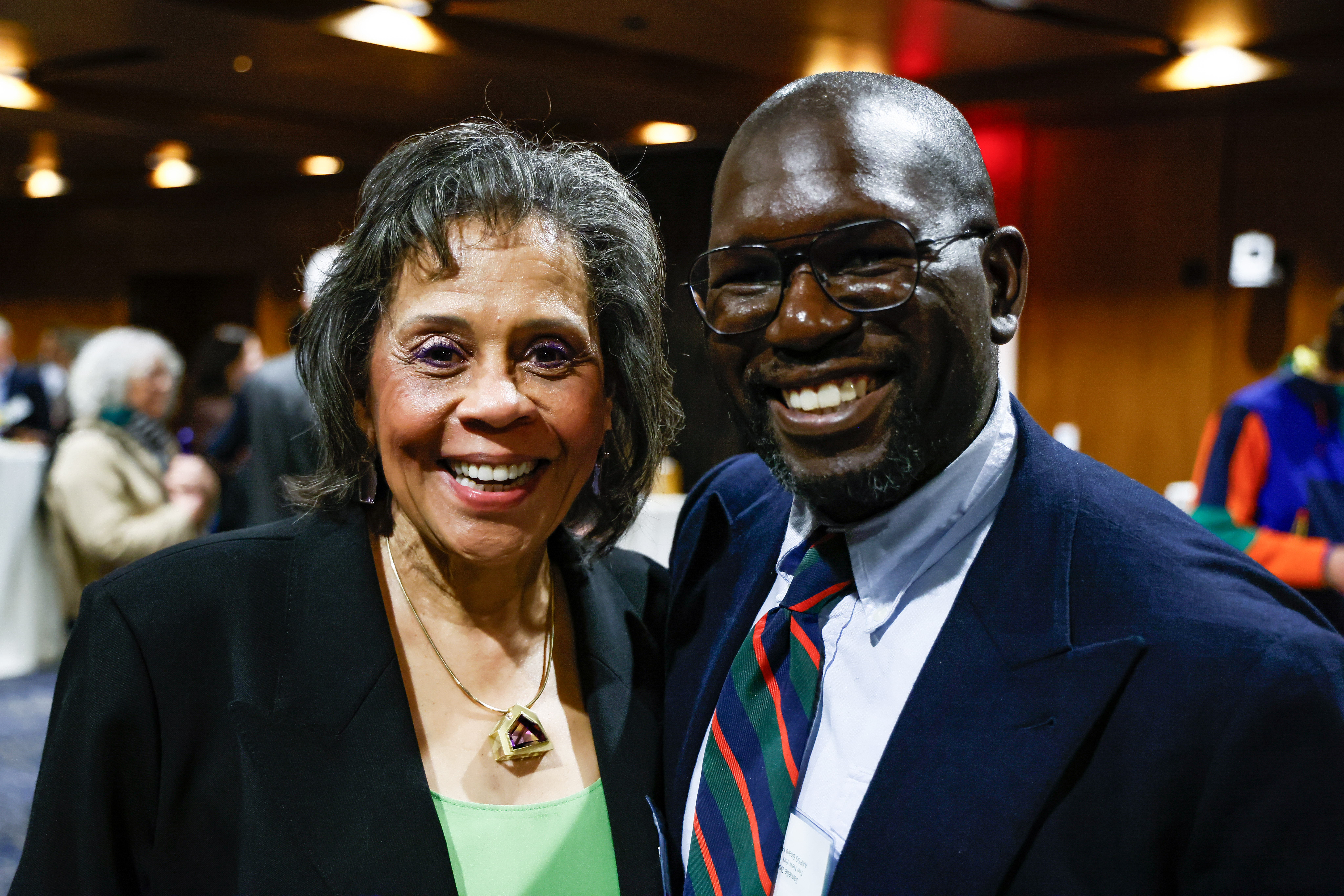
(Photo by Paul Morigi)
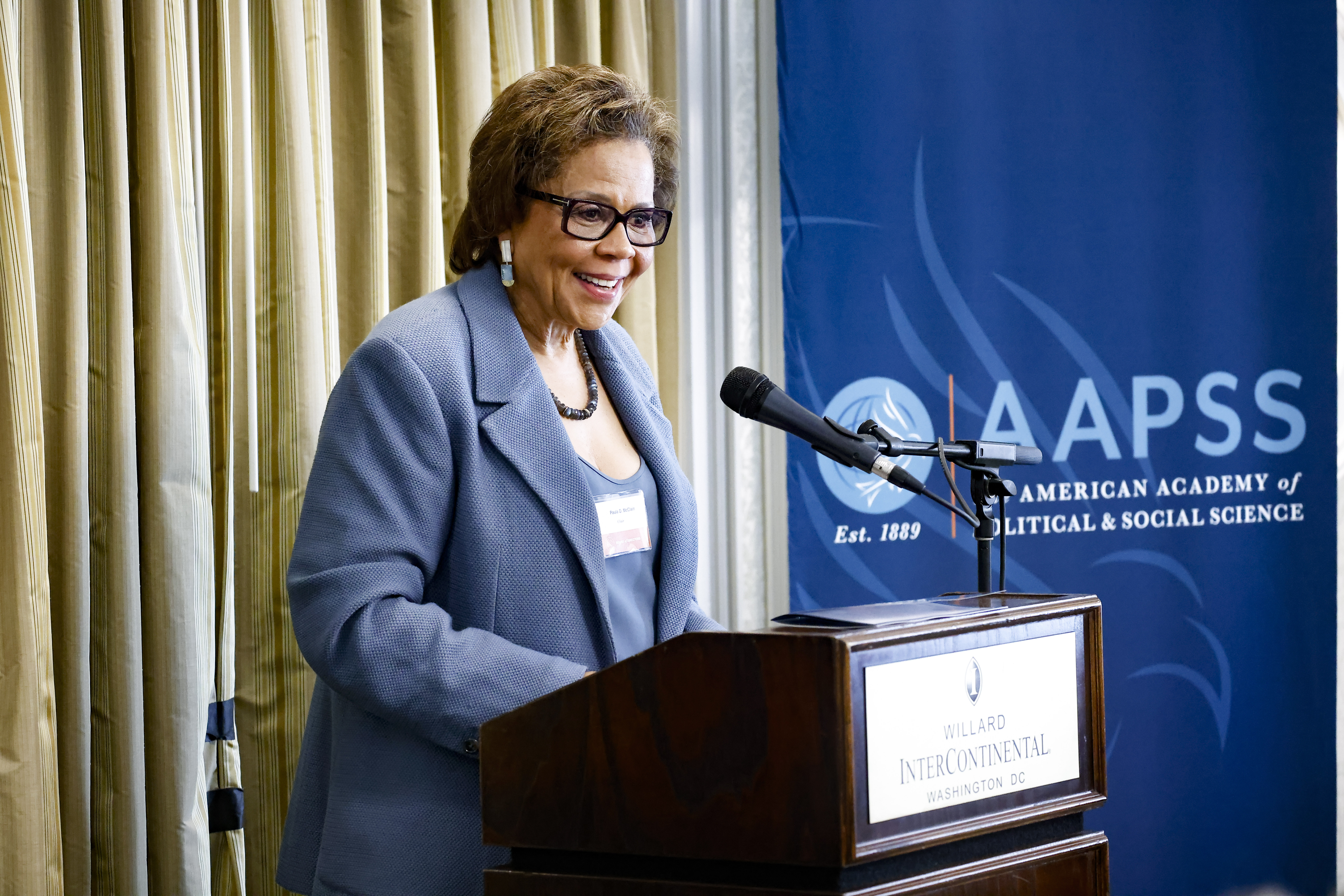
(Photo by Paul Morigi)
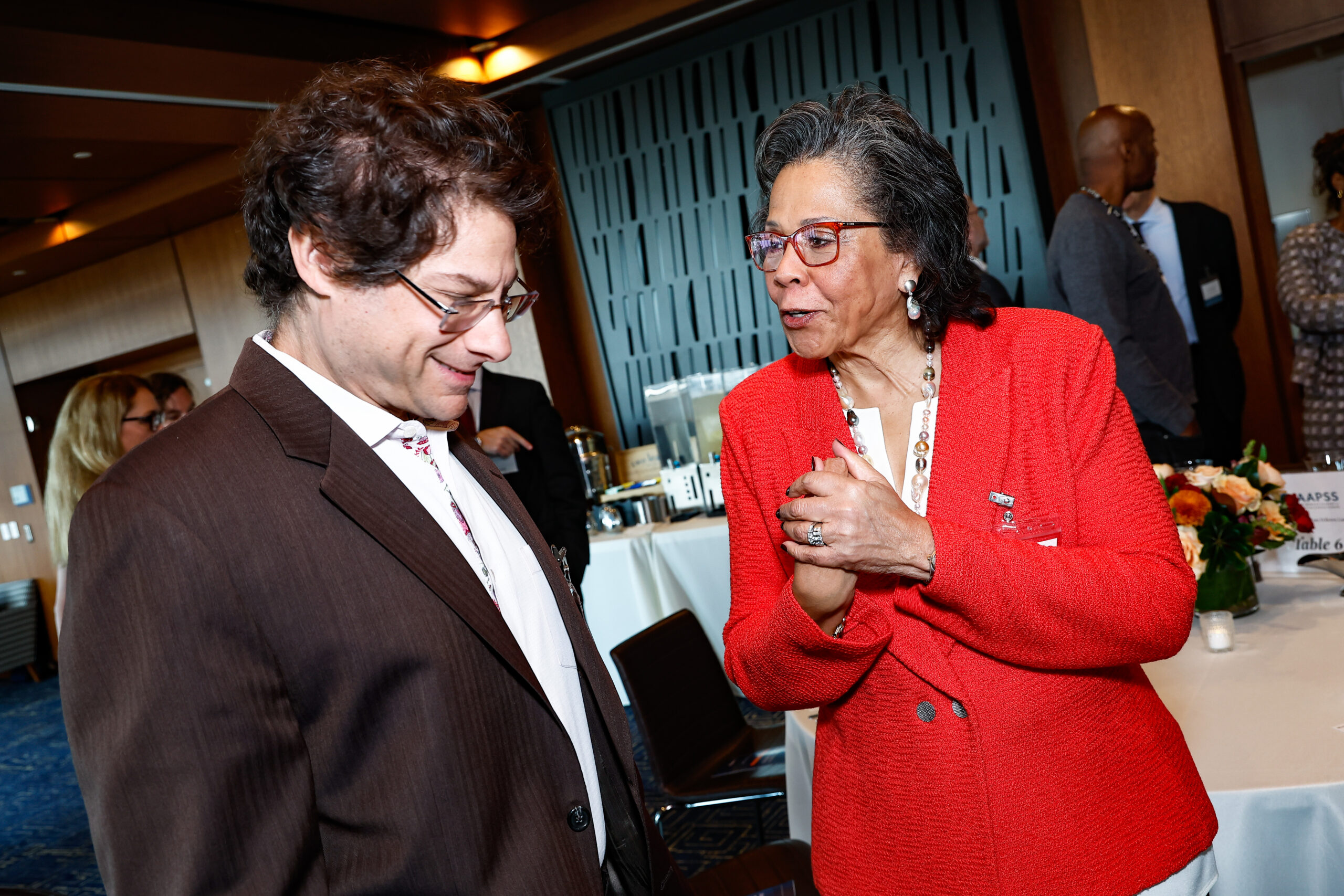
(Photo by Paul Morigi)
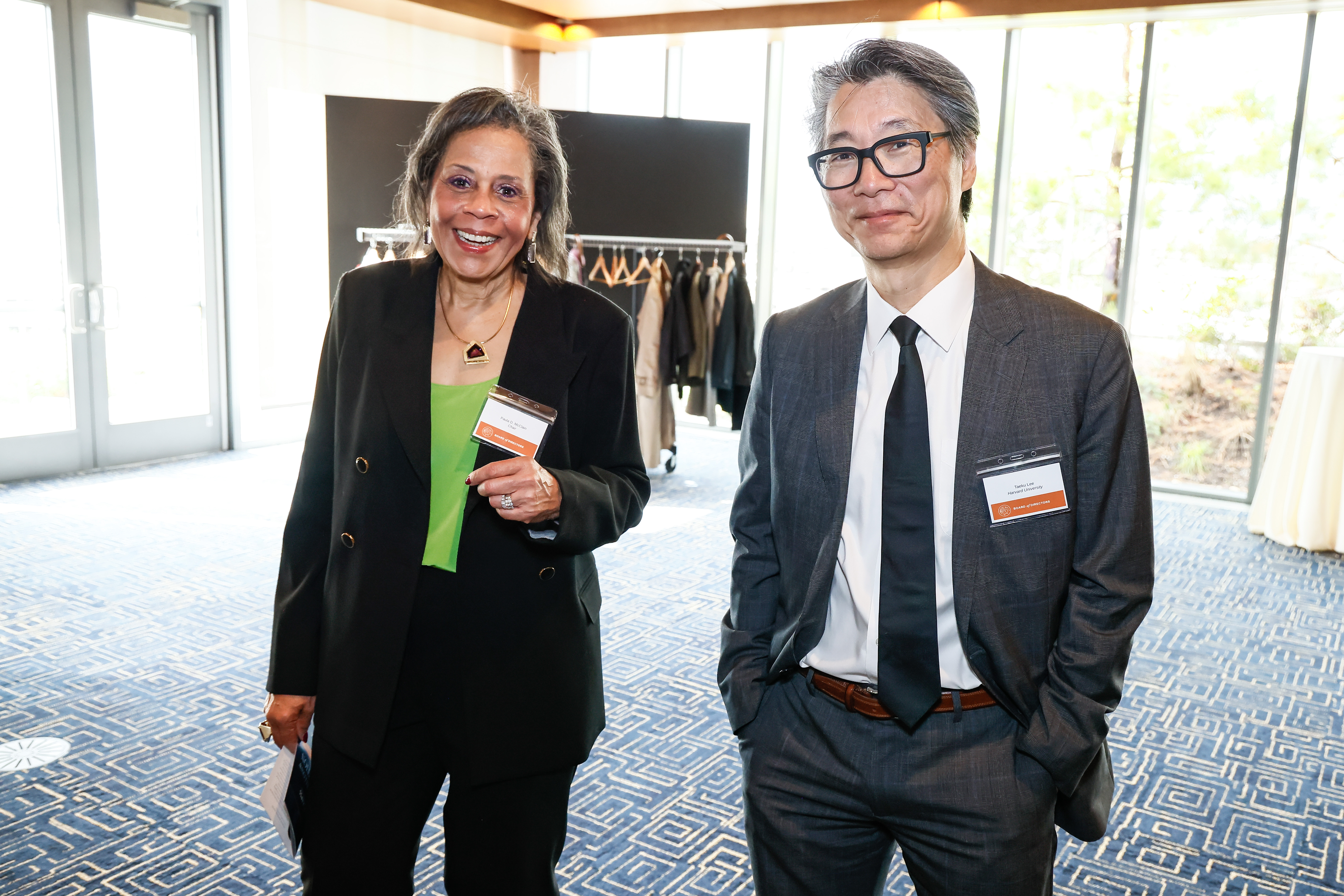
(Photo by Paul Morigi)
