

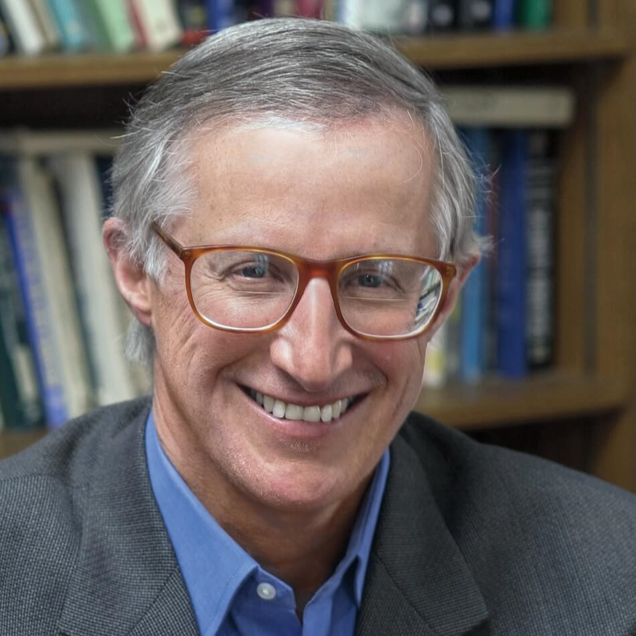
Economist and 2020 Moynihan Prize winner William “Bill” Nordhaus passed away on October 30, 2026, at the age of 85. He was most recently Sterling Professor of Economics, Emeritus, at Yale University.
Nordhaus’s work on the economics of climate change blended environmental science, economics, and policy and has influenced policymakers, economists, and climate activists around the world. Said AAPSS Executive Director Tom Kecskemethy, “Dr. Nordhaus’s work perfectly embodied the core mission of the Moynihan Prize: using social research and evidence to confront critical problems that threaten the human condition. His ability to focus his prodigious intellectual and technical talents on one of the world’s most important issues was both admirable and enviable. We are all worse off for the loss of Bill.”
Originally from Albuquerque, New Mexico, Nordhaus received bachelor’s and master’s degrees from Yale University and his PhD from the Massachusetts Institute of Technology. He spent his entire academic career at Yale and, in addition to teaching, served as provost, vice president for finance and administration, and chair of the faculty senate.
Nordhaus saw climate change as a threat to human existence and was an early advocate for carbon pricing—regulatory methods that incentivize businesses to reduce carbon dioxide emissions and pollutant output. He is best known for developing the Dynamic Integrated Climate-Economy (DICE) model, which projects how economic growth and global warming would be impacted by different emissions policies. Nordhaus was awarded the 2018 Nobel Prize in Economics for this work, sharing the honor with fellow economist Paul Romer. In his acceptance speech, Nordhaus said, “The signal contribution of economics is to recognize that climate change is a harmful unintended side effect of economic growth. … The best remedy for such externalities is a pollution charge—a charge on carbon emissions, or what is now called a carbon tax.”
In an interview with The New York Times shortly after winning the Nobel Prize, Nordhaus blamed the stalling of efforts to slow climate change on anti-tax conservatives and industry. Although proposals to institute a carbon tax have been unsuccessful in the United States and the European Union, some 30 countries around the world and multiple regional jurisdictions have since implemented carbon taxes or emissions trading (“cap and trade”) systems, to promising results.
In 2020, the AAPSS recognized his work with the Daniel Patrick Moynihan Prize. Then–Academy President Kenneth Prewitt called Nordhaus “an easy choice” for the Moynihan Prize, noting that Nordhaus, like the award’s namesake, “was an early and powerful voice on issues that the nation’s leaders were not yet taking seriously.” Due to the COVID-19 pandemic, the ceremony and accompanying lecture were instead held as an online panel event in May 2021, where Nordhaus and three other scholars discussed new approaches that the international community might take to address climate change. A recording of the panel is available below and on YouTube.
Nordhaus is survived by his brother, three children, three grandchildren, and his wife, Barbara, who remarked that “Bill cherished his Moynihan Prize.” Our thoughts are with his family, friends, colleagues, and students.
For more on Nordhaus’s work and legacy, please see the obituaries posted by The New York Times and Yale Daily News.